Travertine Paver Installation in Tampa, FL
Travertine is Tampa Bay's favorite pool deck material for one simple reason: it stays cool under bare feet when everything else is scorching. It's natural stone, it's beautiful, and when it's installed on a proper base, it outlasts every manufactured paver on the market. Here's what travertine installation really involves — and costs — in Tampa Bay.
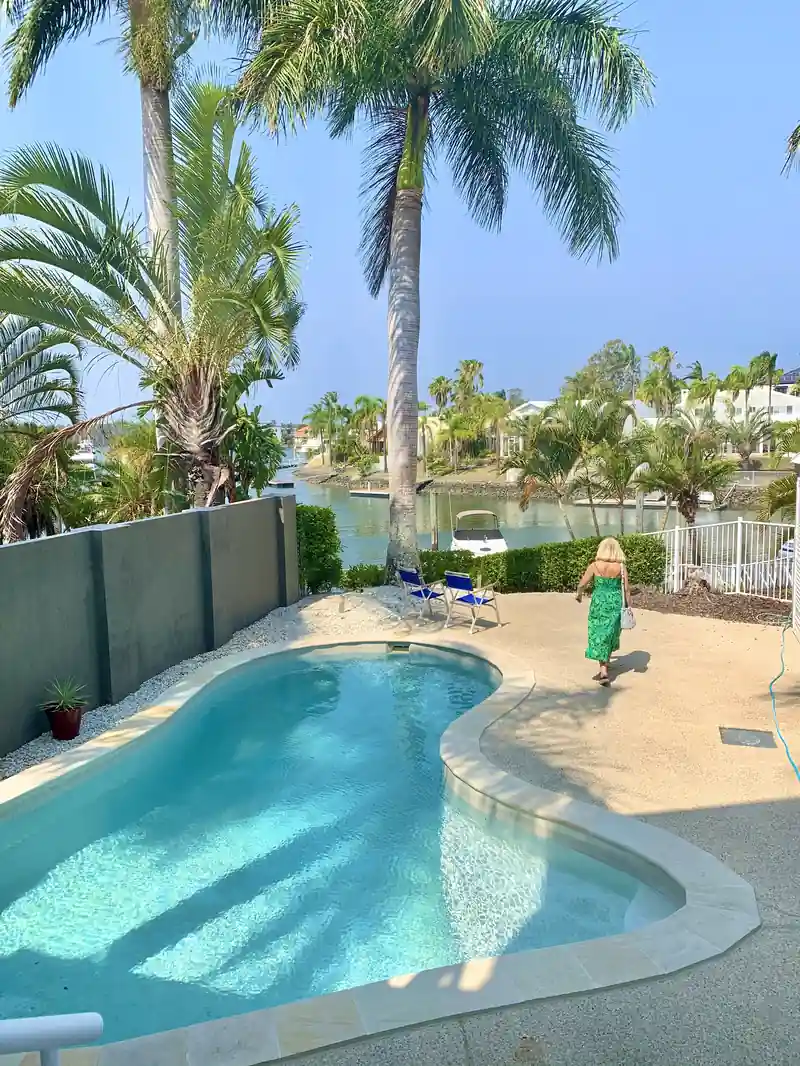
Why Travertine Dominates Tampa Bay Pool Decks
Drive through any pool community in South Tampa, Westchase, or Palm Harbor and you'll see the pattern: travertine around the water, concrete pavers on the driveway. It's not a fashion trend — it's physics. Travertine's porous, light-colored stone reflects solar heat instead of storing it, so a travertine deck is comfortable at 2 PM in August while a dark brick driveway nearby is hot enough to sting bare feet. In a market where the pool is the centerpiece of the backyard six months a year, that one property matters more than anything else.
Cool underfoot, naturally
This is the headline benefit and the reason most of our travertine inquiries start with the words "my concrete deck burns our feet." Travertine pavers absorb and transfer heat far more slowly than poured concrete or dark clay brick. Families with kids — the exact demographic filling new pool builds in New Tampa, Wesley Chapel, and FishHawk Ranch — treat this as a non-negotiable. No shade sail required, no "run to the pool" sprint across hot concrete.
Traction when it's wet
Tumbled travertine (the finish we recommend for pool decks) has a naturally textured, slightly pitted surface that grips well under wet feet. That's a real safety upgrade over stamped concrete, which gets dangerously slick when sealed, or smooth porcelain that turns into a skating rink after a downpour. We specify tumbled or chiseled-edge finishes around water — never honed, which polishes away the traction.
Made for saltwater and chlorine
Tampa Bay is saltwater-pool country, and travertine handles both salt and chlorine far better than manufactured concrete pavers, whose color layer can erode under chemical splash-out. The stone's density resists chemical attack, and sealing it with a penetrating sealer (rather than a film-forming one) keeps pool chemicals, sunscreen, and fertilizer rust from staining while letting the stone breathe.
Travertine vs Other Paver Options in Tampa Bay
Travertine is premium material, and it's worth knowing exactly what you're paying for versus the alternatives before you decide:
| Material | Installed cost | Heat comfort | Best use |
|---|---|---|---|
| Travertine pavers | $14–$24 per sq ft | Excellent — coolest option | Pool decks, patios, lanais |
| Concrete brick pavers | $12–$20 per sq ft | Fair — dark colors get hot | Driveways, walkways, patios |
| Stamped concrete | $10–$16 per sq ft | Poor — stores heat, gets slick | Budget pool decks |
| Natural flagstone | $18–$28 per sq ft | Good | Patios, garden paths |
The honest version: if your priority is a driveway, concrete brick pavers beat travertine on price and vehicle-load durability. If your priority is the pool deck you and your family will walk barefoot across every day from April through October, travertine wins on comfort, traction, and long-term appearance. Many of our projects mix both — travertine around the pool, concrete pavers for the drive — and it looks intentional when planned together.
Our Travertine Installation Process
Travertine is more forgiving of color variation than manufactured pavers (every piece is unique, so blending is built in), but it's less forgiving of base mistakes. Natural stone shows every wave and dip. We build every travertine project the same way:
1. Excavation and Florida-specific base prep
Tampa's fine sandy soil doesn't hold a shape — it shifts, washes, and settles. We excavate 7–9 inches (deeper than many contractors go), install woven geotextile fabric to keep the soil from migrating into the base, then compact crushed concrete or limestone base in lifts. Around pools, we tie the deck grade to the pool coping so water sheets away from the house and the pool, never toward it.
2. Setting bed, pattern layout, and leveling
Travertine goes down on a screeded bedding layer, and each piece is leveled individually — stone has more thickness variation than manufactured pavers, so this is skilled hand work, not just pushing pieces together. We dry-lay the pattern first (French pattern — the four-piece Versailles layout — is the Tampa classic for travertine) so color and texture blend evenly across the whole area instead of clustering in one corner.
3. Concrete edge restraint and polymeric joints
Every travertine installation gets a poured concrete edge to lock the field in place — stone is heavy, and without real edge restraint it creeps under thermal movement. Joints are filled with polymeric sand and activated, which hardens against Tampa's washout rains, blocks weed roots, and keeps fire ants from tunneling up through the gaps.
4. Penetrating sealer (strongly recommended)
Travertine in Florida should be sealed — not optional in our view. A penetrating sealer soaks in and protects against sunscreen, pool chemicals, tannin stains from live oak leaves (the brown ring every Carrollwood patio knows), and fertilizer rust, all without changing the stone's natural look or making it slick. We build sealer into the quote and recommend reapplication every 2–3 years. Learn more on our paver sealing page.
What Travertine Installation Costs in Tampa Bay
Pricing is driven by square footage, pattern complexity, and access — backyard jobs that need material hauled by hand cost more per foot than front-driveway work a forklift can reach. These are 2026 Tampa Bay ranges for professional travertine work:
| Project | Typical range |
|---|---|
| Material — premium grade travertine pavers | $3–$6 per sq ft |
| Installation — pool deck or patio | $14–$24 per sq ft installed |
| Typical 400–600 sq ft pool deck | $5,600–$14,400 |
| French pattern upgrade (vs running bond) | ~$1–$2 per sq ft extra |
| Initial penetrating sealer application | $0.75–$1.50 per sq ft |
| Coping replacement (pool edge stone) | $25–$50 per linear ft |
Most of our travertine pool decks land between $7,000 and $12,000 all-in, and pool coping replacement is the most common add-on — old bullnose coping next to new travertine looks like a dented fender on a new car, so homeowners usually replace it while we're there. Compare with standard pool deck pavers if you're weighing materials, or read what paver installation costs in Tampa for the full market breakdown.
Caring for Travertine in Florida's Climate
Travertine is low-maintenance, not no-maintenance. Two Florida realities need managing: staining and efflorescence. Stains come from sunscreen, leaves (live oak tannin is the big one in Tampa), fertilizers, and hard-water irrigation — all things a penetrating sealer largely prevents. Efflorescence — white mineral haze that wicks up from the base — shows more on travertine than brick because of the stone's porosity; it usually cleans off with an efflorescence treatment and is prevented long-term by sealing. The maintenance routine is simple: rinse regularly, reseal every 2–3 years, and address stains early before they set. Follow that and a travertine deck looks better at year ten than most manufactured surfaces look at year three.
Frequently Asked Questions
How much does travertine paver installation cost in Tampa?
Professionally installed travertine in Tampa Bay typically runs $14–$24 per square foot, depending on pattern, edge work, and base prep. A standard 500 sq ft pool deck usually lands between $7,000 and $12,000. Every project starts with a free on-site measurement and a fixed written quote.
Does travertine get hot in Florida sun?
Travertine stays noticeably cooler than concrete or brick pavers — that's why it's Tampa Bay's favorite pool deck material. Its porous, light-colored stone reflects heat instead of storing it, so it's comfortable under bare feet even on the hottest July afternoons.
Is travertine slippery when wet?
Tumbled travertine has a naturally textured surface with good wet traction — much safer around pools than stamped concrete or smooth porcelain. We recommend tumbled or chiseled-edge finishes (never honed) around water, and penetrating sealer adds stain protection without making the surface slick.
Do travertine pavers need to be sealed?
Yes. Travertine's porosity absorbs sunscreen, pool chemicals, fertilizer rust, and tannin stains from live oak leaves without protection. A penetrating sealer keeps all of that out without changing the stone's natural look, and should be reapplied every 2–3 years in Florida's UV and rain. See our paver sealing page for details.
Can travertine pavers be used for a driveway?
They can, but it's not the most common choice — driveway travertine needs thicker stone (1.25-inch or more) and a heavier compacted base, which raises the price. Most Tampa homeowners use travertine for pool decks, patios, and walkways and choose concrete brick pavers for driveways. We'll walk through the tradeoffs honestly on-site.
How long do travertine pavers last in Florida?
Decades — travertine is natural stone and outlasts manufactured pavers when installed on a proper base. The stone doesn't fade or wear out; individual pavers can be lifted and replaced if one ever cracks. Keep the sealer current every 2–3 years and the deck looks better at year ten than most surfaces look at year three.
Travertine Installation Across Tampa Bay
We install travertine pavers for pool decks, patios, lanais, and walkways in Tampa, Clearwater, St. Petersburg, Brandon, and Riverview. Related services: pool deck pavers, paver sealing, and paver installation — or see what paver installation costs in Tampa.
Get the Cool, Low-Maintenance Deck Tampa Summers Demand
Free on-site measurement: we'll walk the area, show you travertine patterns and finishes, and quote a fixed price.
Call (813) 435-6556 Get a Free Quote