Paver Sealing in Tampa Bay, FL
Professional paver sealing for driveways, pool decks, patios, and walkways — deep-cleaned, re-sanded with polymeric sand, and protected with premium UV-resistant sealer. The best defense your pavers have against Florida.
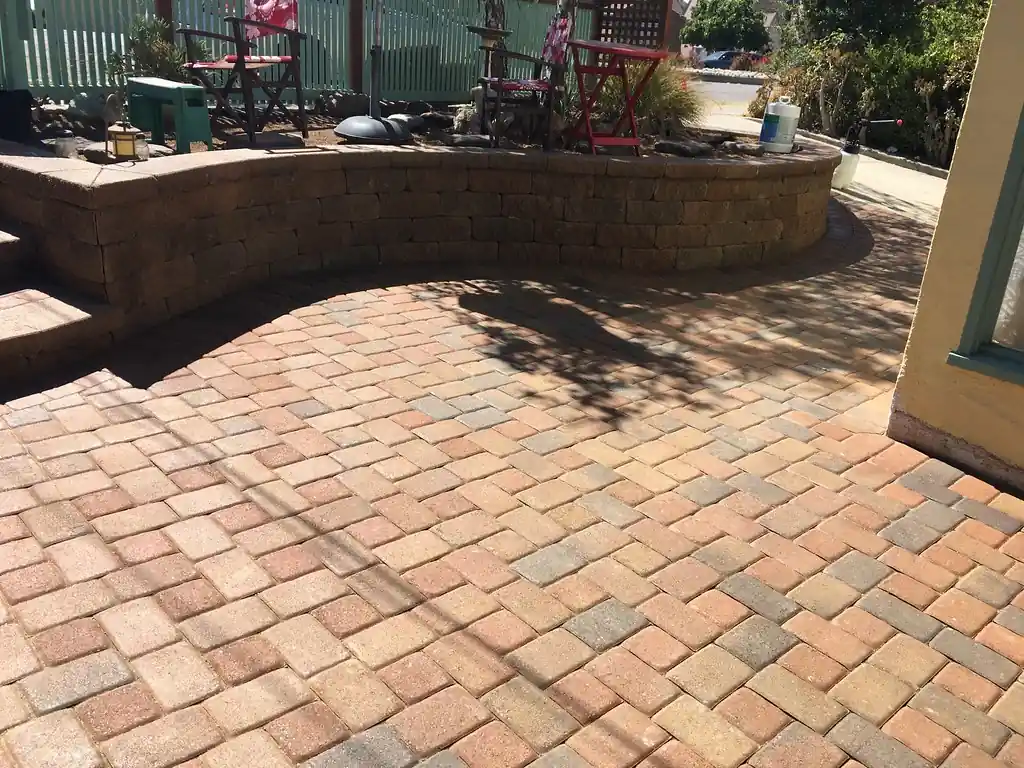
Why Sealing Matters More in Florida
Unsealed pavers in Tampa Bay are fighting a losing battle. Our UV index spends half the year at extreme levels, bleaching color out of unprotected pavers. Afternoon thunderstorms drive water deep into the surface, feeding the mold and mildew that turn shaded areas green-black every summer. Irrigation and pool water leave mineral deposits. Tire traffic grinds in oil and rubber. Sealer is the sacrificial barrier that takes this abuse instead of your pavers — and unlike the pavers, it's renewable every few years.
What quality sealer actually does
- Blocks UV fading — keeps colors rich instead of washing out to gray
- Repels stains — oil, rust, tannins from oak leaves, and fertilizer wash-off clean up instead of soaking in
- Stabilizes joints — locks polymeric sand in place against Tampa's downpours
- Fights mold and mildew — sealed surfaces dry faster and give growth less to grip
- Reduces efflorescence — limits the moisture movement that brings white salt deposits to the surface
- Deepens color — a "wet look" finish makes pavers look freshly laid again
Our Sealing Process
1. Deep cleaning
We start with a thorough pressure wash using surface cleaners (not a zero-degree wand that etches pavers) plus treatment for mold, mildew, rust, and efflorescence. Sealer applied over dirty pavers just seals the dirt in — the cleaning is half the job. Stubborn oil spots get degreaser treatment; heavily soiled driveways may need a second pass.
2. Old sealer assessment and stripping
If your pavers were sealed before, we test whether the old coating is sound. Failing, peeling, or hazy sealer gets stripped — new product will not bond to a failing layer, and skipping this step is why so many reseal jobs look terrible within a year. Stripping adds cost, but it's the difference between a 3-year seal and a 3-month disappointment.
3. Joint re-sanding with polymeric sand
After cleaning, joints are often half-empty — Tampa rains wash plain sand out relentlessly. We re-sand with polymeric sand, sweep it deep into every joint, and mist-activate it so it sets firm. This locks pavers together, blocks weed roots, and denies ants the loose sand they love to excavate. Joints must be fully dry before sealing, so we schedule sanding and sealing with proper cure time between them.
4. Premium sealer application
We apply commercial-grade water-based or solvent-based sealer (matched to your surface and desired finish) in even coats with professional sprayers — never the blotchy roller job you see on DIY attempts. Around pools we add grip additive for traction. Two thin coats beat one thick coat every time: better penetration, no hazing, no peeling.
5. Cure and walkthrough
Sealer needs a dry window to cure — we watch Tampa's forecast like hawks and won't apply ahead of an incoming storm. Foot traffic is usually fine the same day; vehicles wait 24–48 hours. We walk the finished surface with you and leave you with simple maintenance guidance.
How Often to Reseal in Tampa Bay
Plan on every 2–3 years. Sun-blasted driveways and pool decks with constant chemical exposure trend toward 2; shaded patios can go 3. The tell-tale signs it's time: water no longer beads on the surface, colors look washed out, joints are losing sand, or weeds are returning. Resealing on schedule is dramatically cheaper than restoring neglected pavers — and far cheaper than replacing them. Set a reminder; your future self will thank you.
Sealing FAQs
How much does it cost to seal pavers in Tampa?
$1.50–$3.00 per square foot in the Tampa Bay area. An 800 sq ft driveway typically runs $1,200–$2,400 depending on condition, old sealer removal, and joint sand replacement. See our detailed breakdown: paver sealing cost in Tampa.
How often do pavers need to be sealed in Florida?
Every 2–3 years. Florida's UV breaks sealer down faster than northern climates, and Tampa's humidity, rain, and pool chemicals accelerate wear. High-traffic driveways and pool decks lean toward every 2 years.
Will sealing make my pool deck slippery?
Not when done right. We use sealers formulated for wet areas and add a grip additive around pools for extra traction. A sealed deck also resists algae — and algae is far more slippery than any sealer.
Can you seal pavers that were sealed before?
Yes — but failing old sealer usually must be stripped first, since new product won't bond to peeling or hazy coatings. We test your existing sealer and include stripping in the quote when needed.
How long does paver sealer take to dry?
Dry to the touch in hours, foot traffic the same day, vehicles after 24–48 hours depending on product and weather. We schedule around Tampa's rain — sealer needs a dry cure window.
Does sealing stop weeds and ants in paver joints?
It dramatically reduces both. We re-sand joints with polymeric sand that hardens to block weed roots, then sealer locks everything against washout. It's the best long-term defense available.
Sealing for Every Surface
Driveway Sealing
Oil, tire marks, and UV take the worst toll here — sealing keeps driveways HOA-sharp.
Pool Deck Sealing
Chemical-resistant protection with grip additive for safe, cool bare feet.
Patio Sealing
Mold, mildew, and leaf tannins don't stand a chance on a sealed patio.
Serving Tampa, Clearwater, St. Petersburg, Brandon, and Riverview. Need new pavers instead? See paver installation.
Bring Your Pavers Back to Life
Free on-site assessment: we'll test your current sealer, check your joints, and give you a fixed written price.
Call (813) 435-6556 Get a Free Quote