Paver Installation in Tampa Bay, FL
Brick paver installation done the right way — excavated, based, graded, and edged for Florida's sandy soil, afternoon storms, and HOA standards. Driveways, patios, pool decks, and walkways across Tampa Bay.
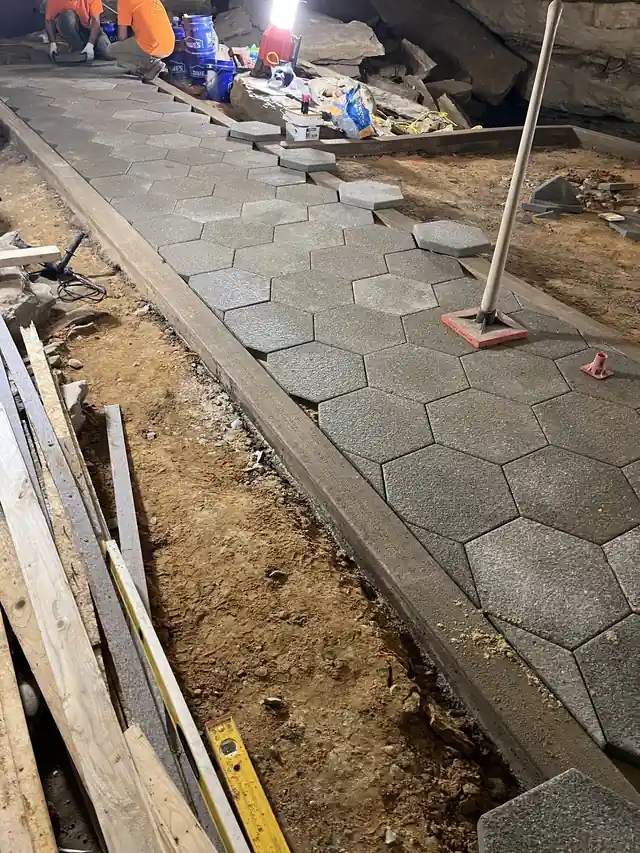
What Proper Paver Installation Looks Like
Most paver failures in Florida aren't paver failures — they're base failures. A beautiful paver goes down on a bad base and two rainy seasons later it's wavy, settled, and full of weeds. We build every project on the same foundation we'd want under our own driveway, because in Tampa Bay the ground moves and the rain doesn't stop.
Excavation and soil prep
We excavate 7–9 inches below finished grade for driveways (slightly less for patios and walkways), removing roots, organics, and soft spots. Tampa's soil is famously sandy — great for drainage, terrible for bearing weight — so we compact the subgrade before a single inch of base rock goes in. Soft spots get over-excavated and backfilled with compactable material rather than paved over and hoped for the best.
Compacted base rock
On top of the subgrade goes 4–6 inches of crushed base rock (limerock or approved aggregate), placed in lifts and compacted with a plate compactor until it rings solid. This is the structural layer that carries vehicle loads and resists the settling that plagues Florida driveways. Driveways get the full 6 inches; patios and walkways get 4. Skipping base depth is the most common corner cut in our industry, and it's the one you'll pay for later.
Grading for Florida drainage
Every project is graded to move water away from your home, garage, and lanai — typically a 1–2% slope. We plan for the 4 PM deluge, not the average drizzle: downspout discharge points, low spots in the yard, and how water behaved on your property during the last big storm all factor into the grade plan. Standing water against a foundation in Florida is an invitation to much bigger problems.
Bedding sand, laying, and edge restraint
Pavers bed on roughly an inch of screeded concrete sand, laid tight in your chosen pattern. Perimeter edges get concrete edge restraint or aluminum edging staked into the base — this is what keeps the whole field from creeping outward under traffic and heat expansion. Without real edging, even a perfect installation spreads within a few years.
Compaction and polymeric sand joints
After laying, the surface is compacted to seat every paver, then joints are filled with polymeric sand — not plain sand. Polymeric sand hardens when misted with water, locking pavers together while resisting washout from heavy rain, weed growth, and ant colonization. In Tampa's climate, this step is the difference between joints that last years and joints that need redoing every spring.
Paver Styles, Colors, and Patterns
We install the major paver lines Florida homeowners know — classic Holland stone, tumbled pavers with an Old World feel, large-format modern slabs, and permeable options where drainage codes or HOA rules call for them. Popular patterns include herringbone (the strongest interlock, ideal for driveways), basketweave, running bond, and ashlar for larger patios. Color choice matters more than most people think in Florida: lighter tones reflect heat and stay comfortable barefoot around pools, while darker borders and accents define edges beautifully. During your consultation we'll lay out actual samples in your light — showroom lighting lies, Florida sun doesn't.
How Long Installation Takes
A straightforward walkway or small patio: 2–4 days. An average driveway: 4–6 days. Large driveways with circle kits, steps, or retaining integration: up to two weeks. Weather is the wildcard — Tampa's summer storms can pause excavation and base work, and we won't lay pavers on a saturated base just to stay on schedule. We'd rather lose a day than build you a problem.
What to Expect on Installation Day (and the Days After)
A paver installation is active construction, and it's worth knowing what the week looks like. Day one is usually the loudest: excavation equipment, dump trailers hauling out soil and old concrete, and base rock deliveries. We protect your landscaping with barriers, keep the work zone contained, and stage materials on the driveway or street — never on your lawn. Dust is inevitable during cutting; we cut wet to control it and rinse down at day's end.
You'll have crew vehicles and equipment on site each workday, typically from early morning to late afternoon. We need access to an outdoor water spigot and an exterior outlet. If you work from home, the noisiest phases — excavation and plate compaction — are usually done by mid-project. Pets should stay inside or with a neighbor during work hours for their safety.
After the final walkthrough, there's a short care list: keep vehicles off new installations for the recommended cure period, avoid turning steering wheels while stationary on fresh pavers for the first weeks (it can scuff the surface), and hold off on sealing until the pavers have cured. We'll leave you with written aftercare instructions and a direct number if anything looks off in the first 30 days. Settling questions, joint sand washout after the first big storm, a paver that doesn't look quite right — call us. We'd rather hear about it early.
Explore Our Installation Services
Driveway Pavers
Vehicle-rated installation engineered for daily traffic and Florida soil movement.
Patio Pavers
Backyard and lanai patios graded to drain through the heaviest afternoon storms.
Pool Deck Pavers
Cooler, slip-resistant surfaces purpose-built for life around a Florida pool.
Walkway Pavers
Entries and paths that stay level and look sharp from the curb.
Installation Across Tampa Bay
We install pavers throughout the region — see what's specific to your area: Tampa, Clearwater, St. Petersburg, Brandon, and Riverview. Already have pavers that need protection? See paver sealing.
Get a Free Installation Estimate
On-site measurement, drainage review, samples in your own light, and a fixed written quote. No pressure, no obligation.
Call (813) 435-6556 Get a Free Quote